
Tainan Tableware
Designer 方芊文 / 鄭靖非
Project Highlights
The Tainan Tableware brings Tainan’s culture, history, and local character into everyday tableware. Unlike my previous market-driven projects, this project focused more on cultural heritage and emotional connection, giving traditional tableware a new look while keeping the memories and character of Tainan’s food culture.
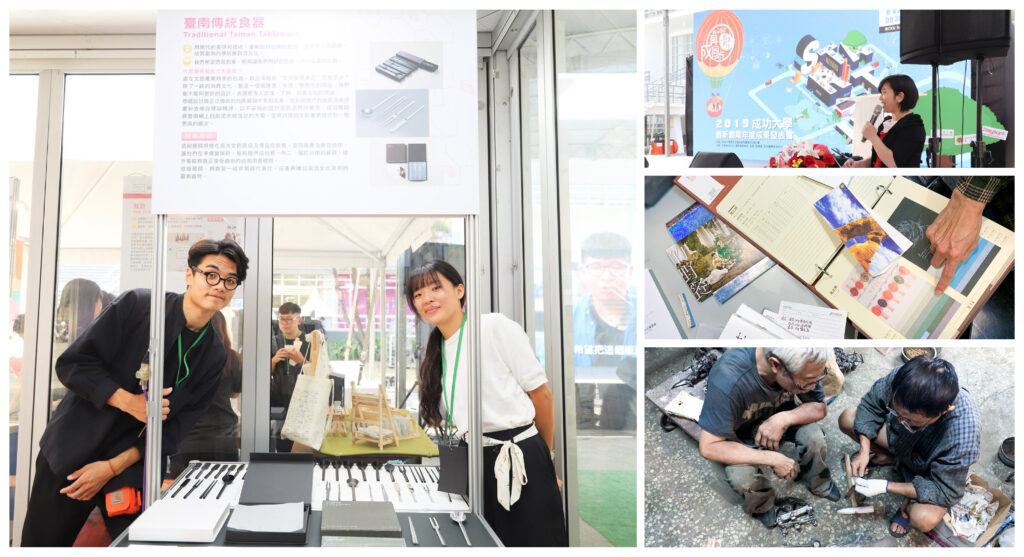
The project was selected for the NCKU Innovation Dream Project and featured in My Cultural and Creative Design Inspiration Book, published by Hong Kong ColorTone Publishing Co., Ltd.
Design Feature
● Four-Piece Tableware Set
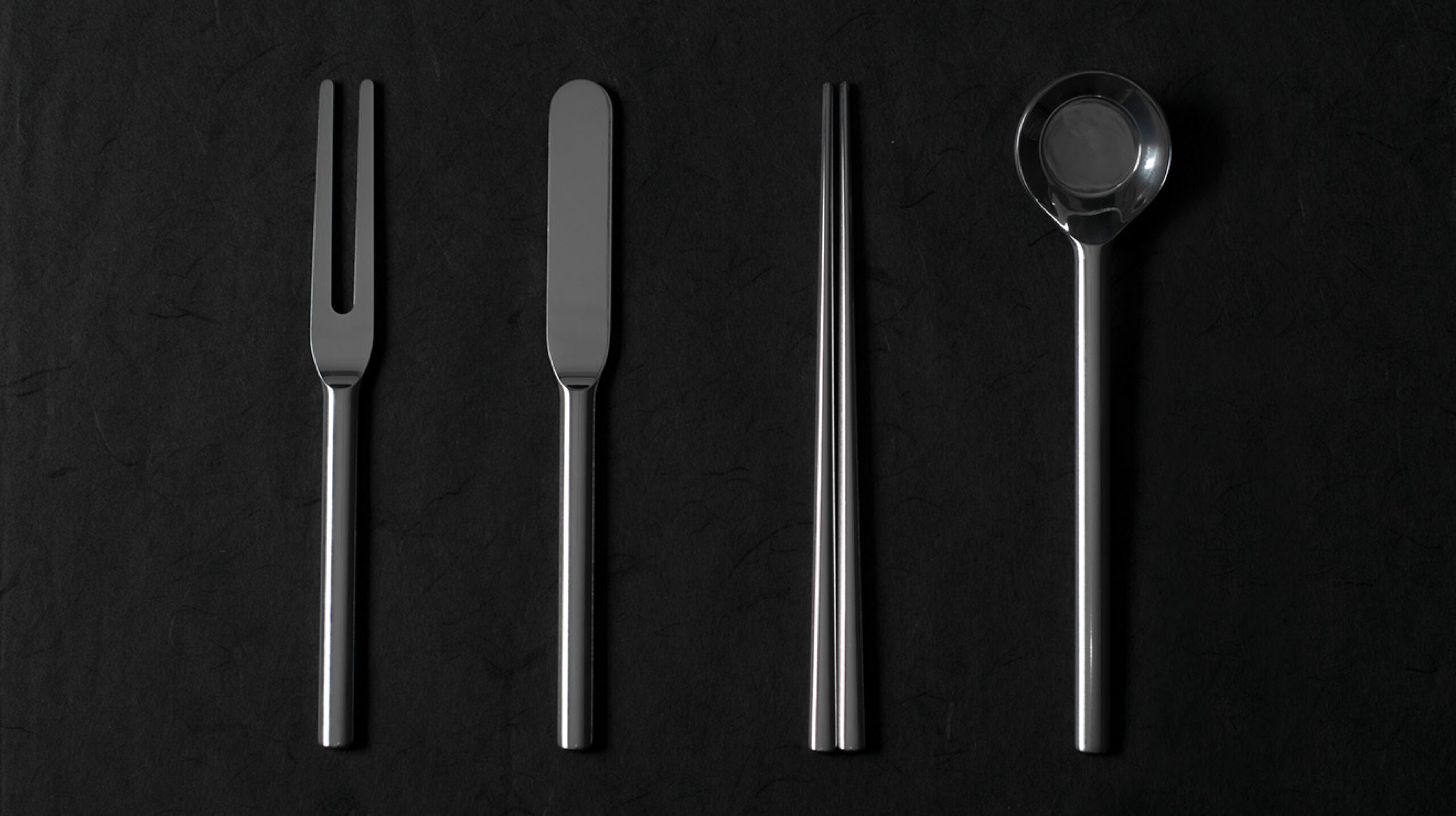
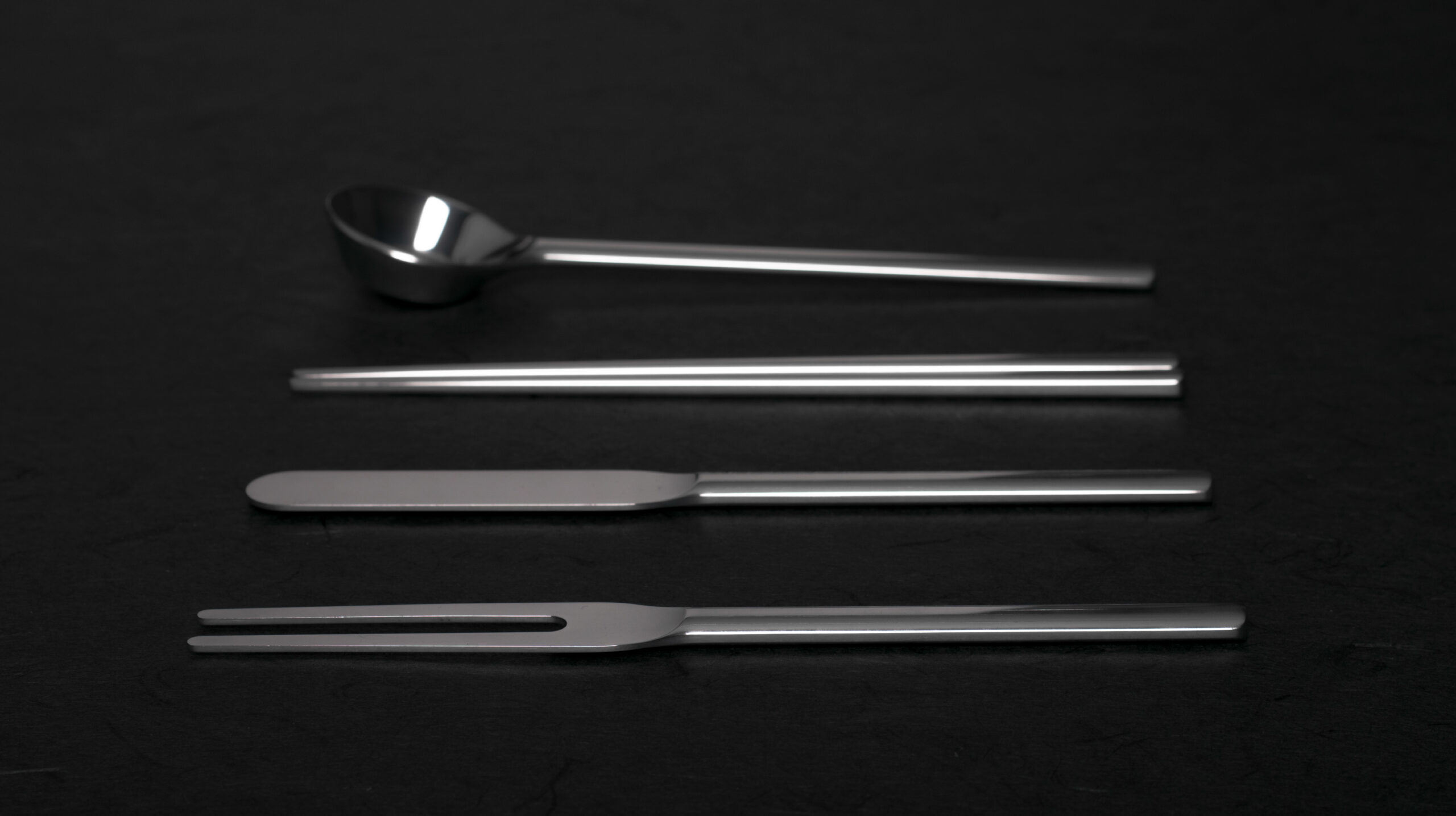
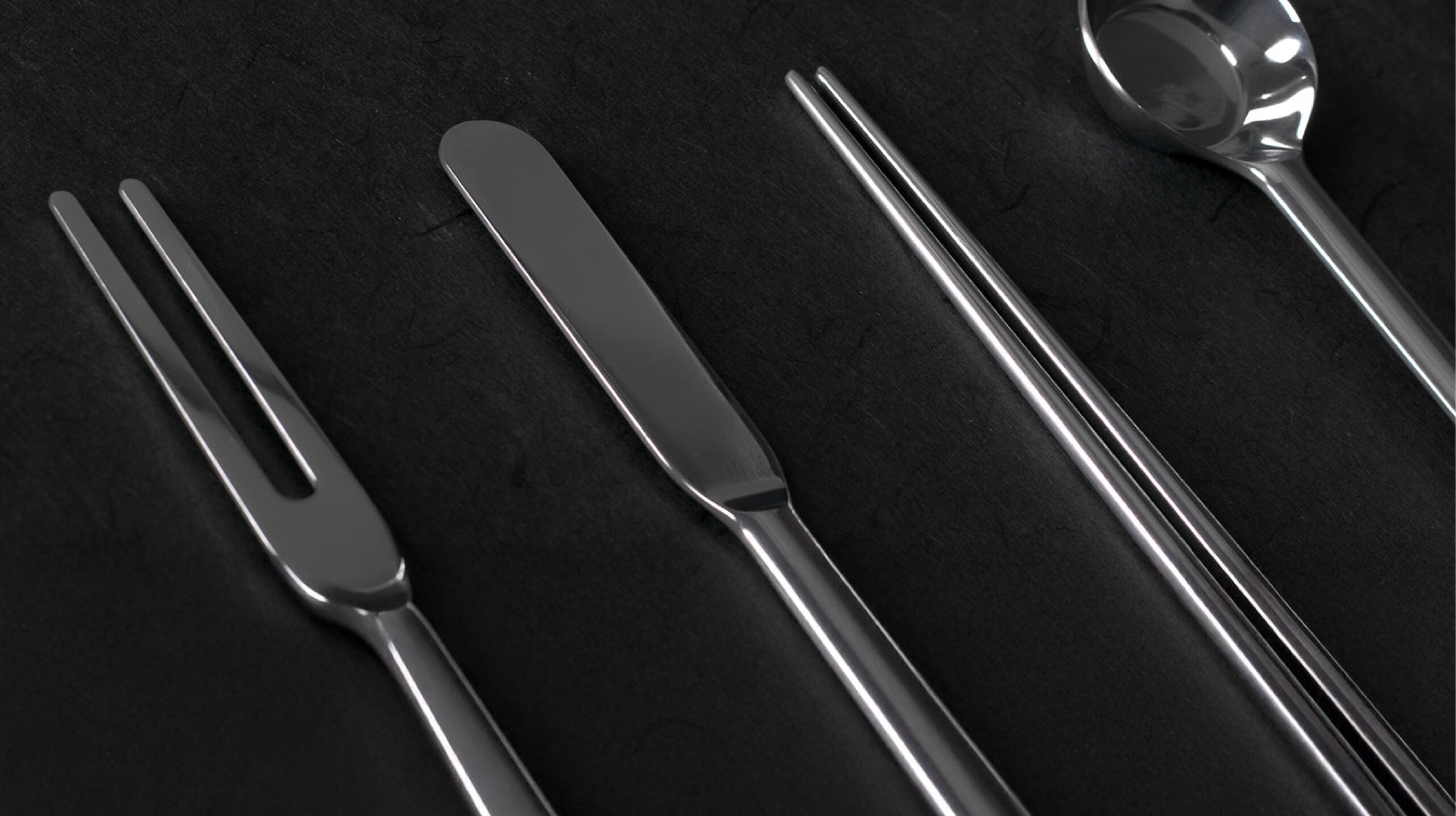
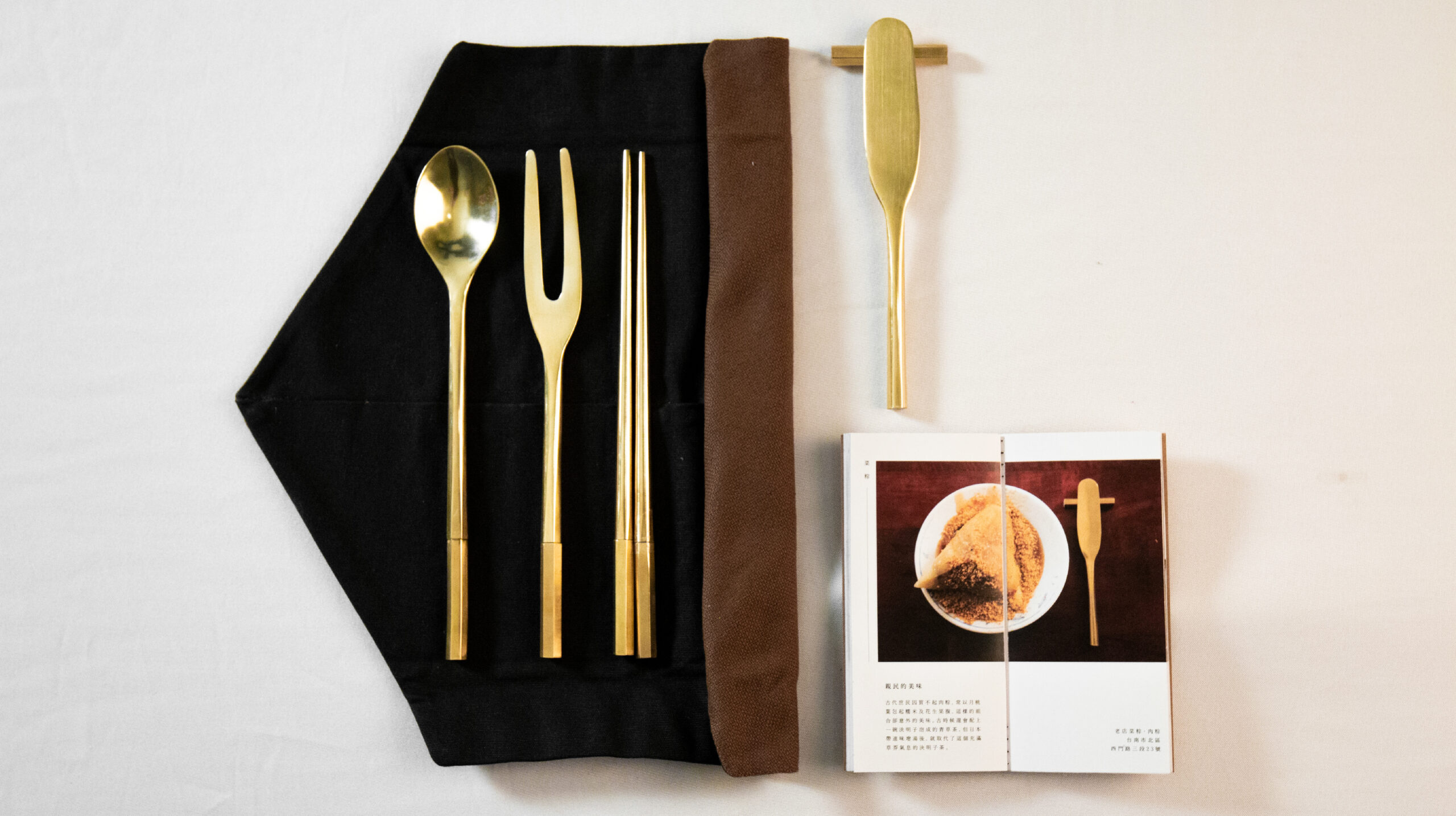
The set includes chopsticks, a stick, a long fork, and a spoon, inspired by traditional utensils used for Tainan street food, such as bamboo strips and long bamboo forks. Simple proportions and refined metal finishes reinterpret these familiar forms for modern everyday use.
● Food Culture Cards
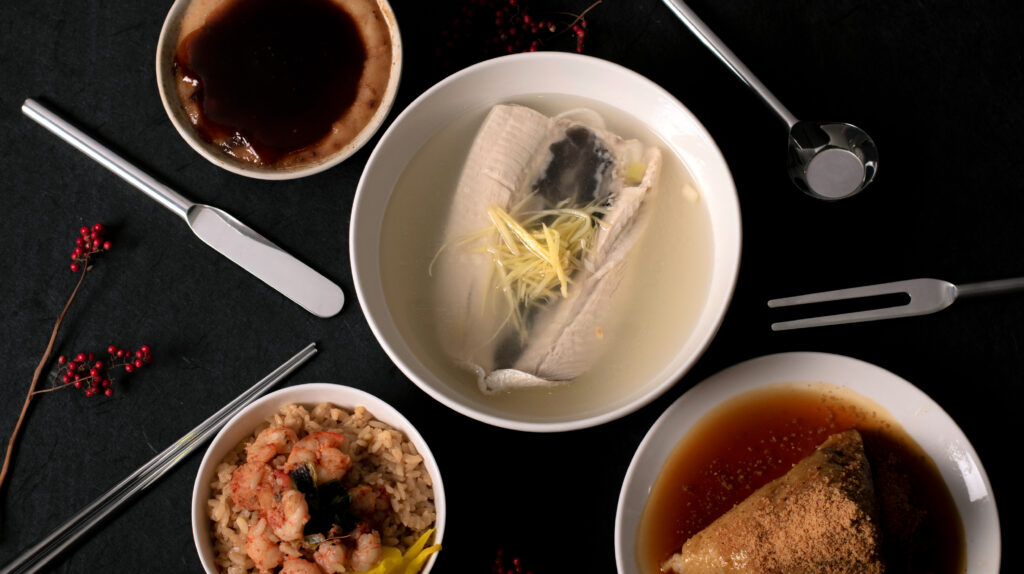
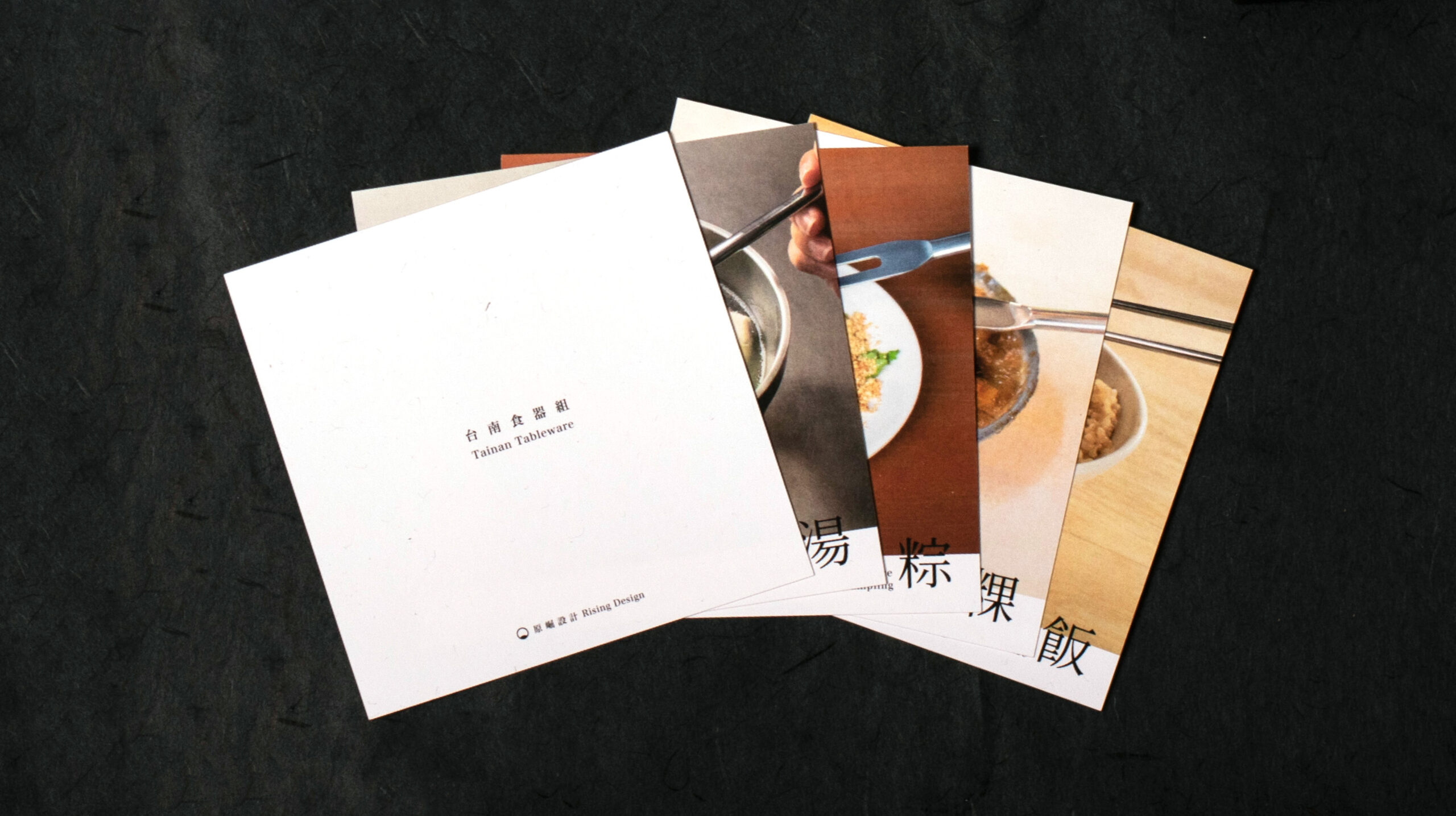
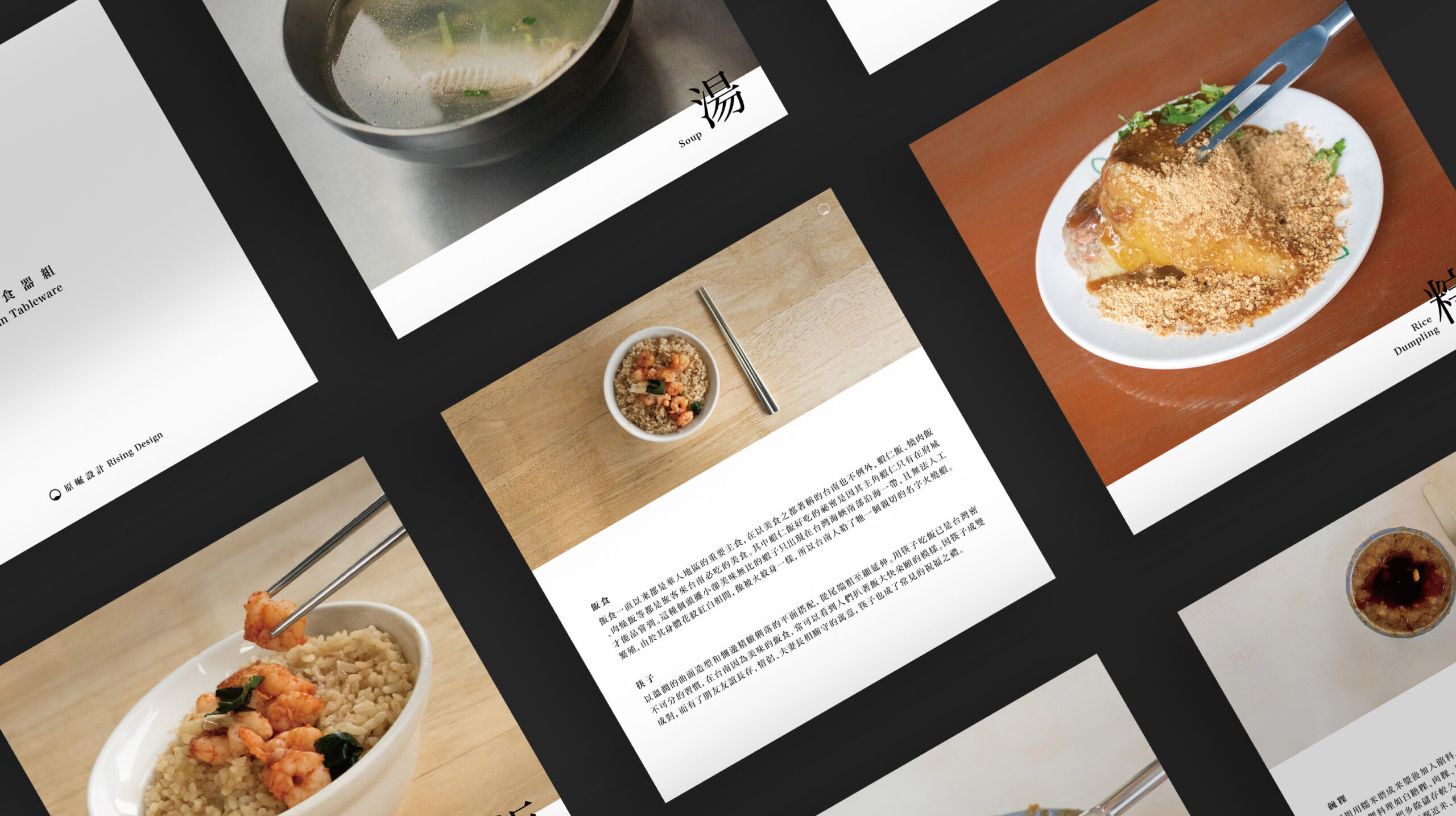
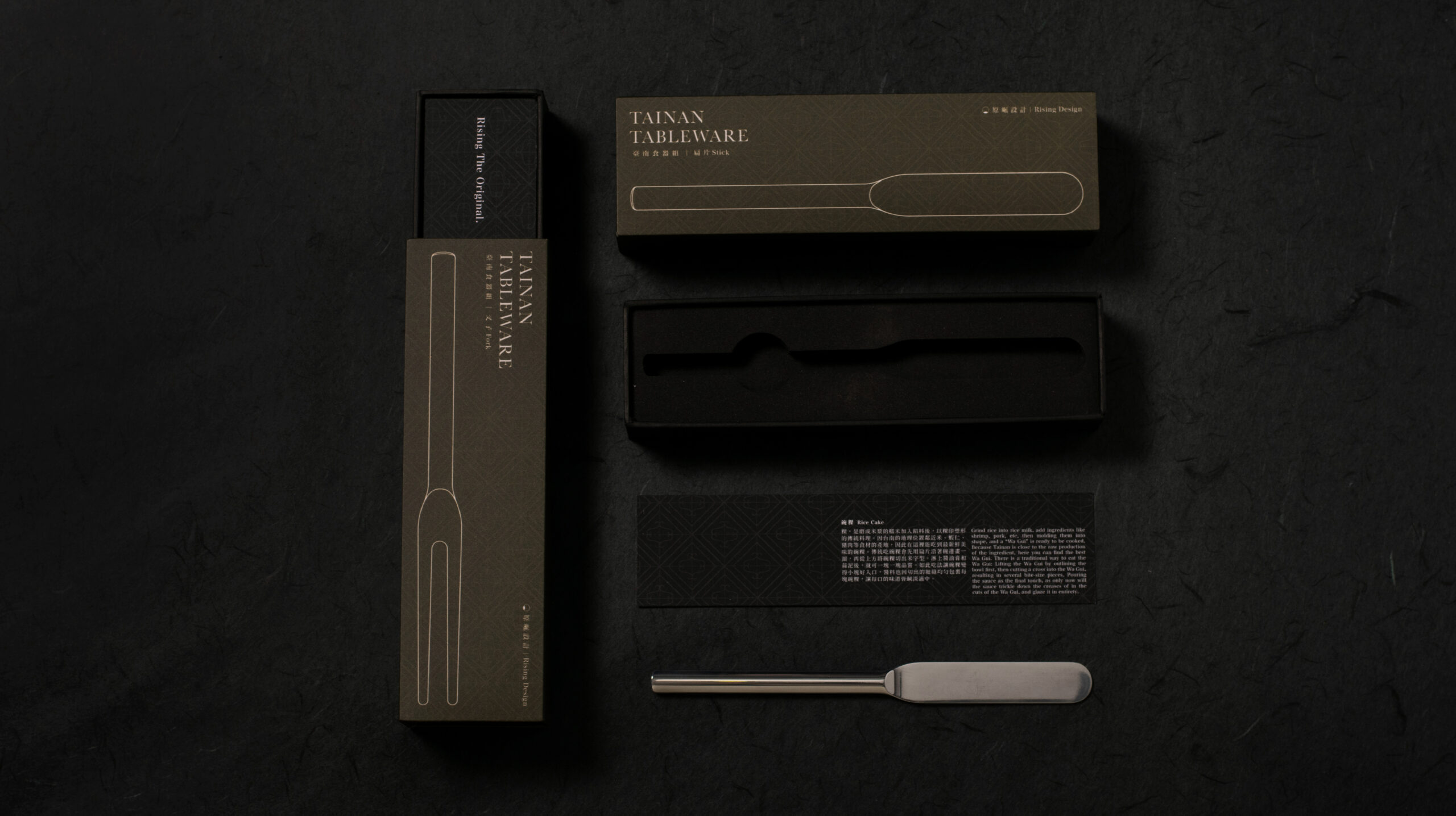
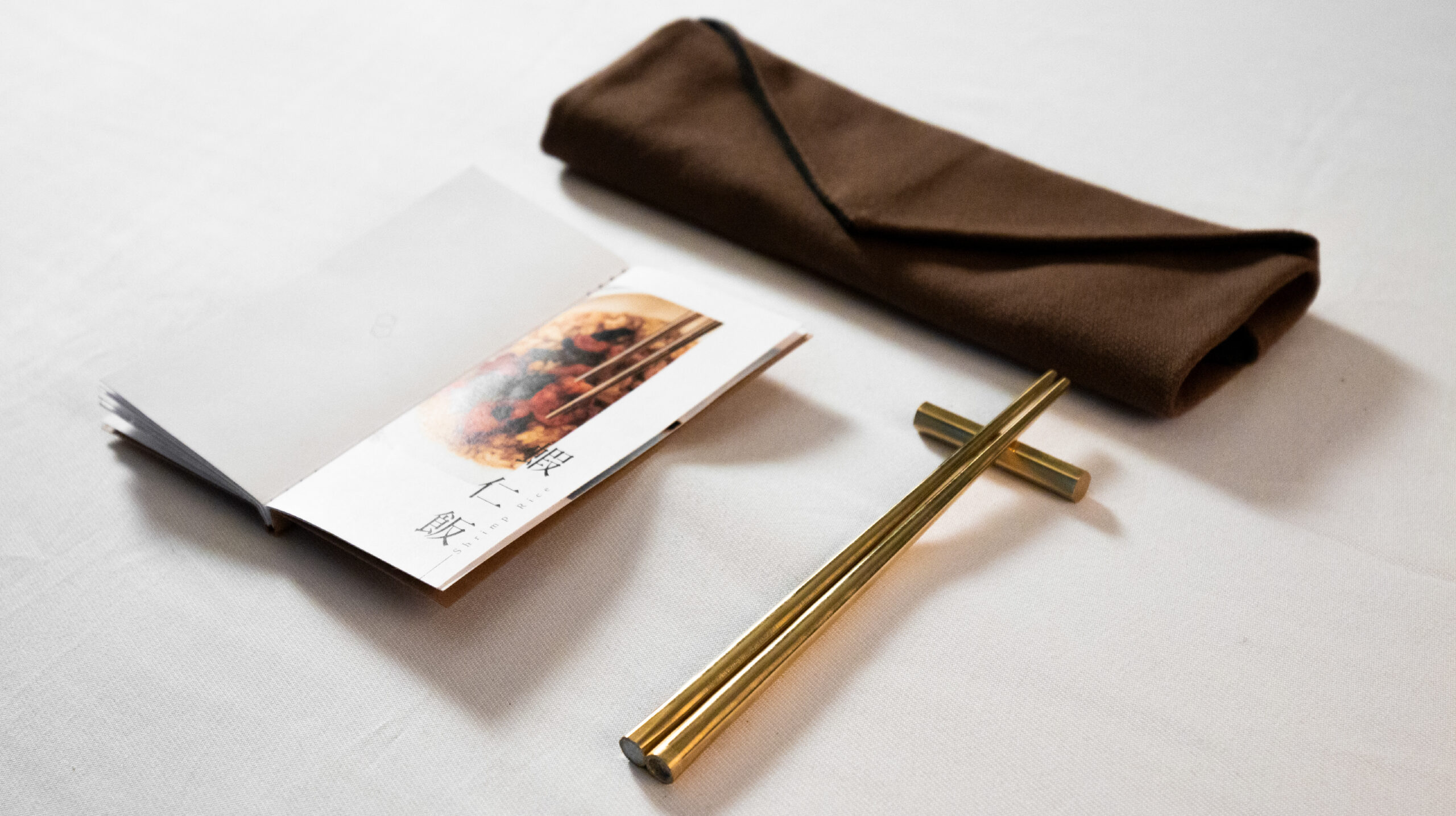
Each set comes with food culture cards introducing the history, flavors, and eating methods of four iconic Tainan dishes. The cards help users discover the stories behind the food while enjoying their meal.
● Packaging Design
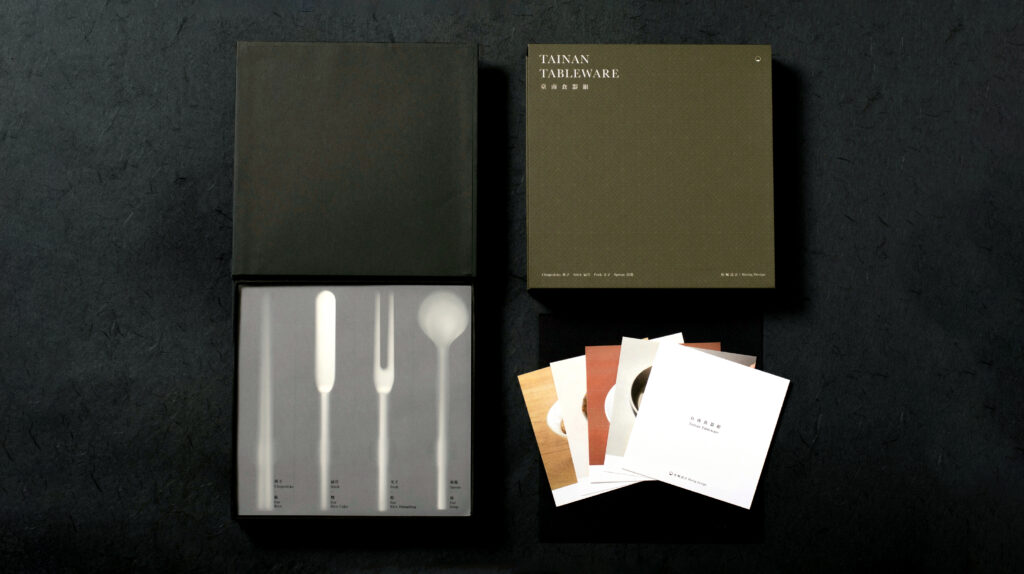
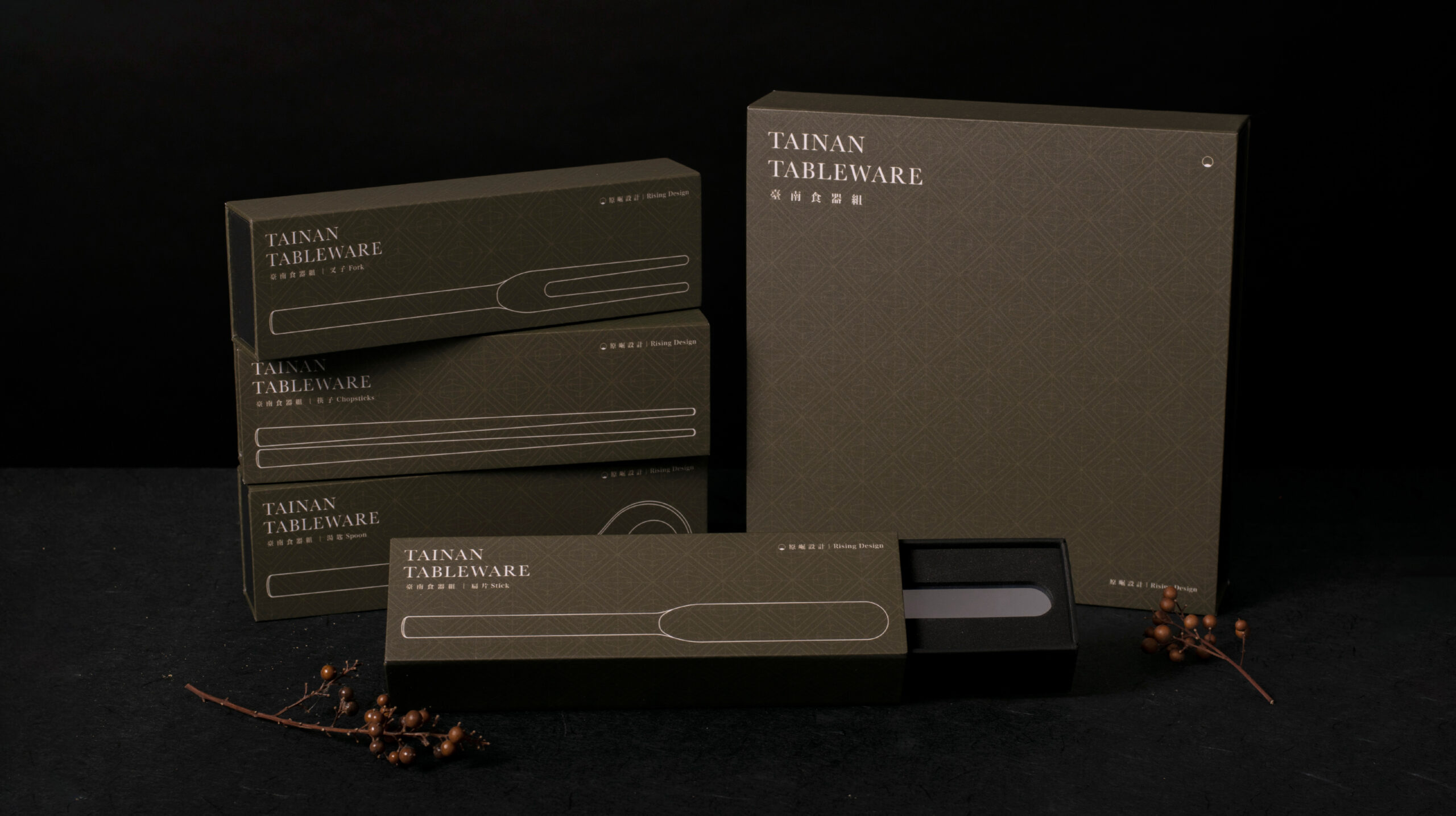
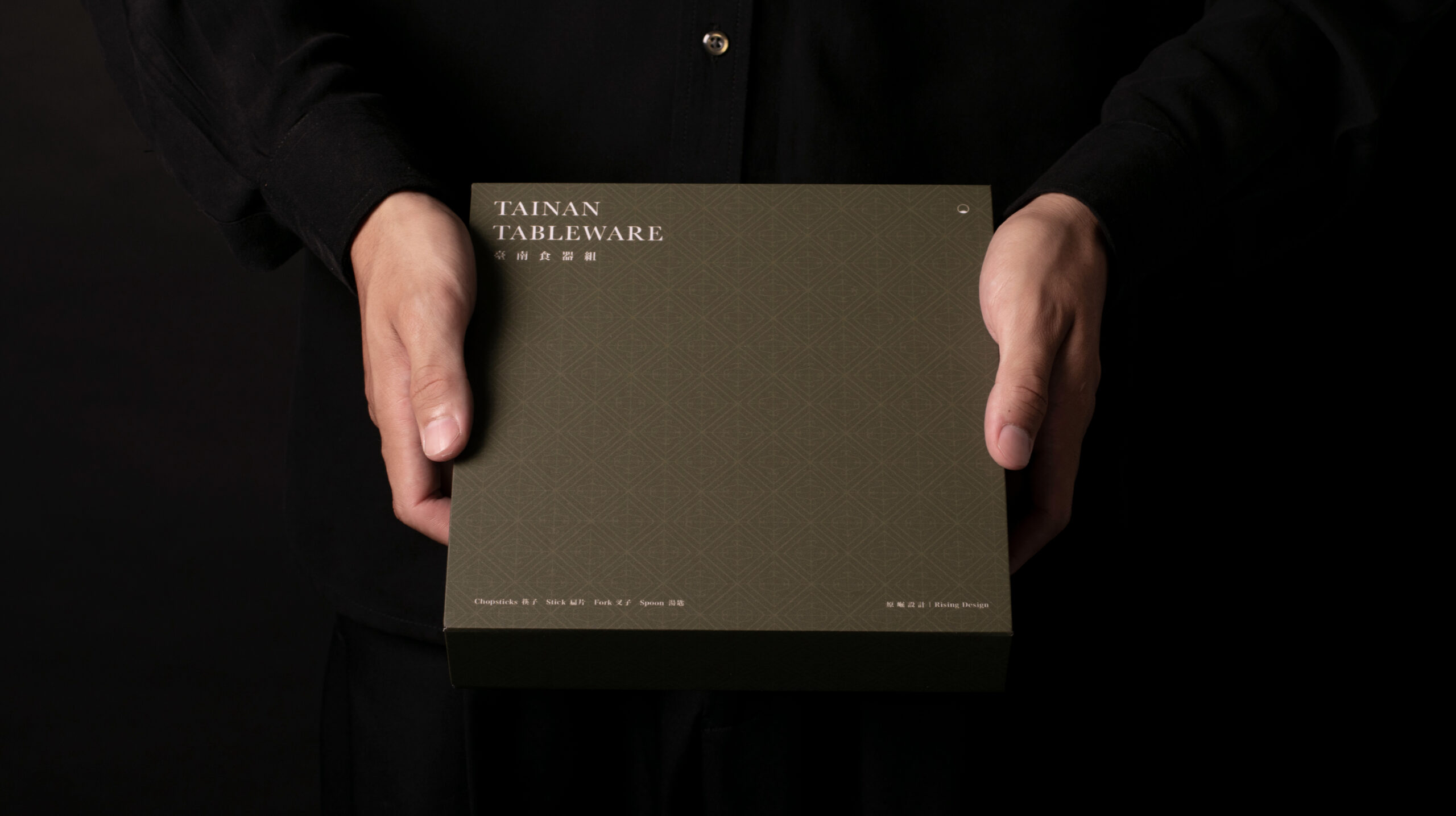
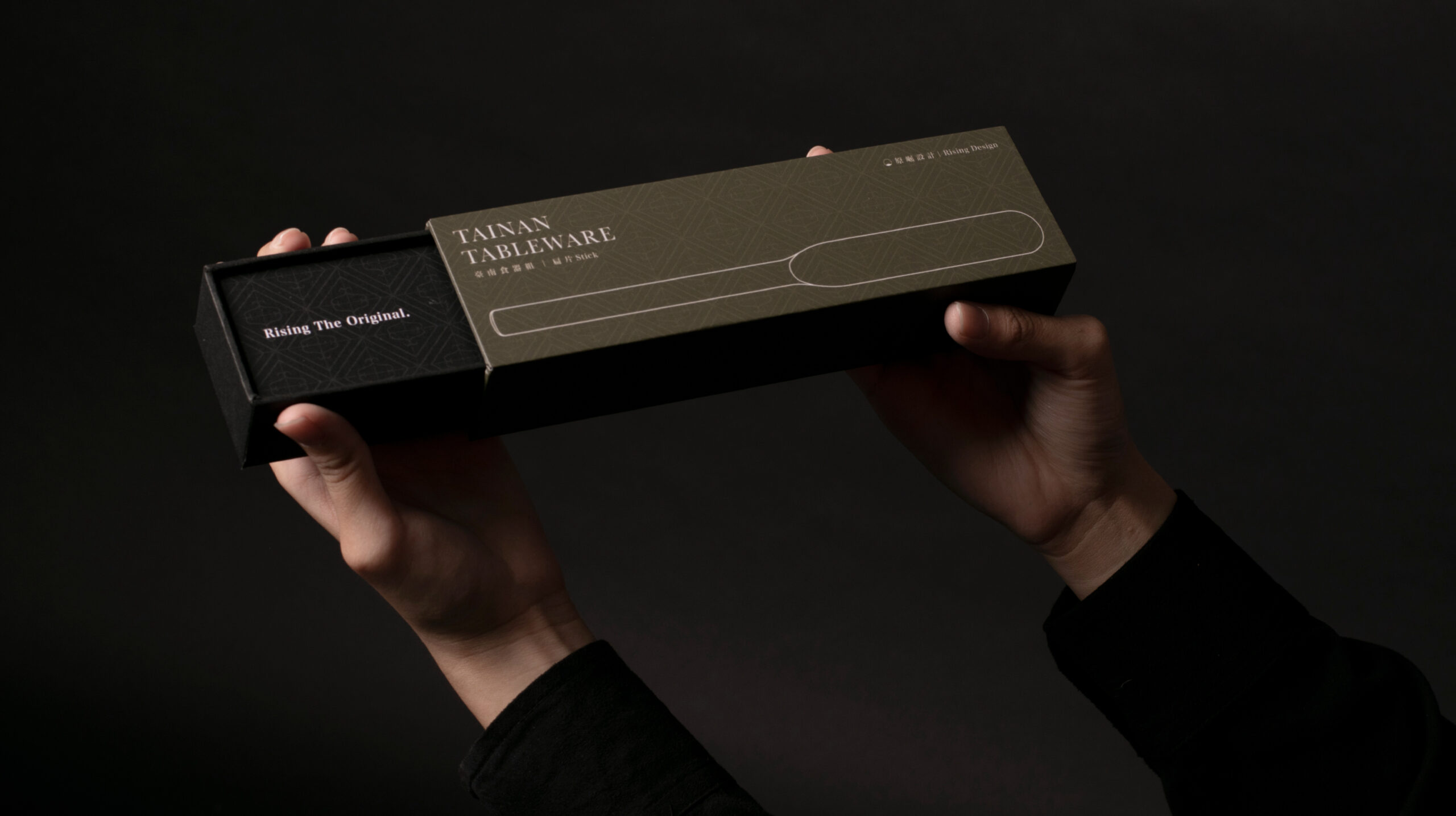
The packaging uses a dark green color palette and a drawer-style structure for a simple and elegant look. The embossed pattern is inspired by traditional Tainan window grilles, creating a subtle local identity. The inner structure protects the tableware while creating a thoughtful unboxing experience, making the set suitable for both everyday use and gifting.
Design Details — Tableware
Fork
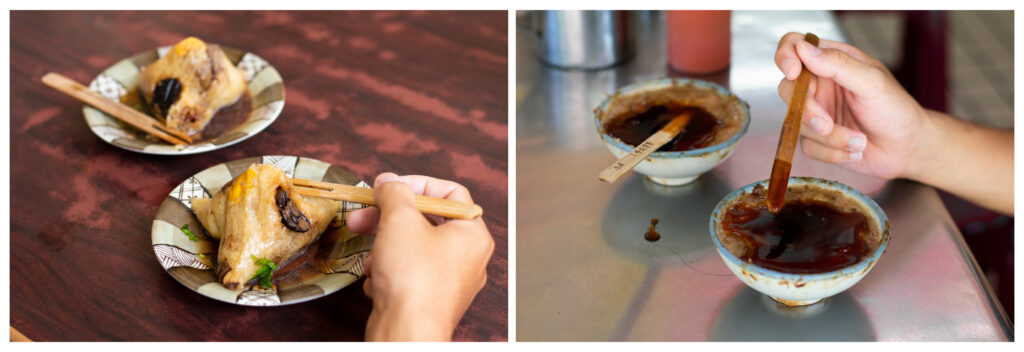
Inspired by traditional bamboo forks, the long fork uses soft, rounded curves with an extended tip. The longer tip makes it easier to cut foods such as zongzi into smaller pieces before picking them up.
Stick
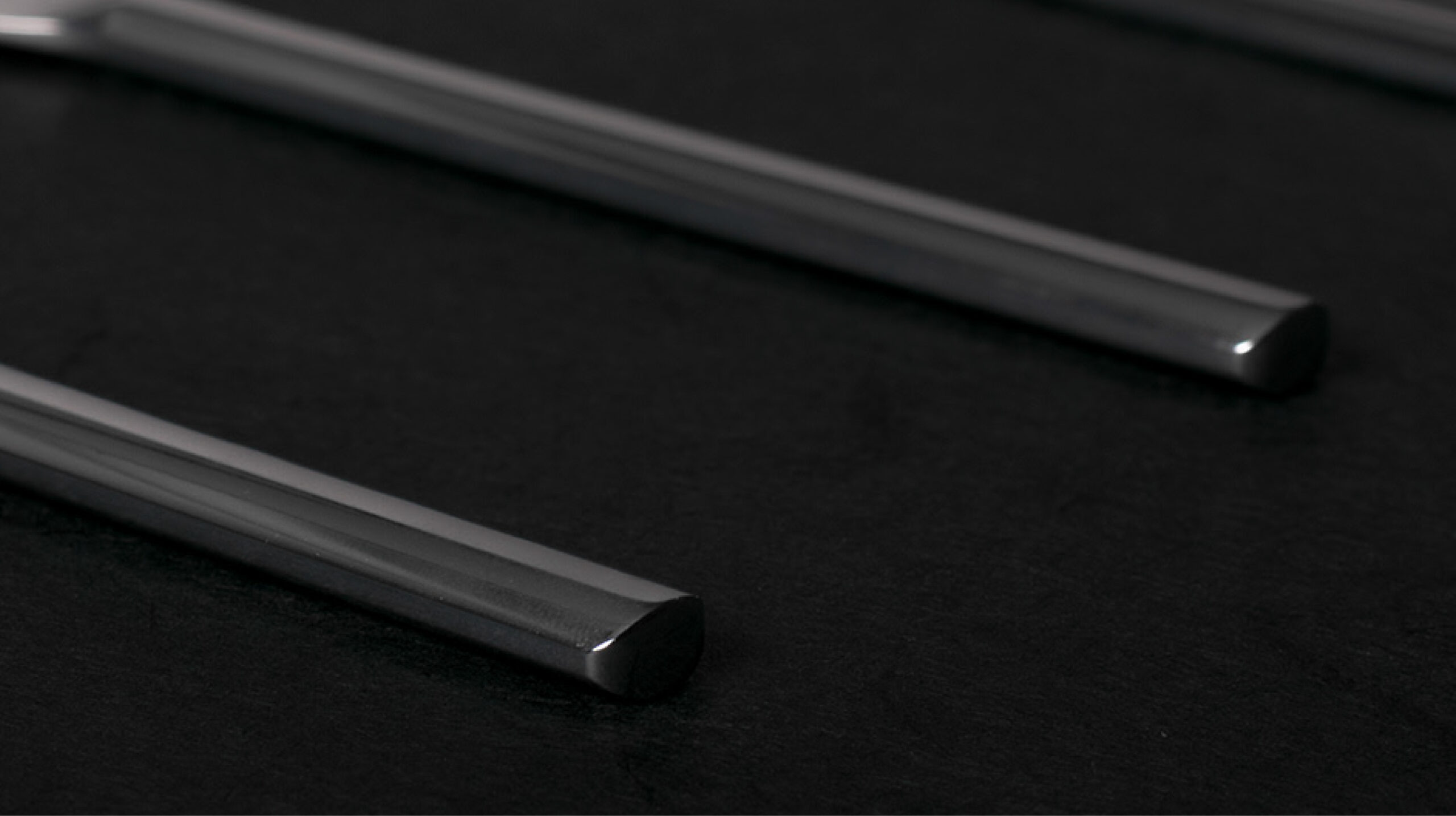
Inspired by the bamboo sticks traditionally used to eat Wagui, a traditional Tainan rice cake. The flat shape is paired with a rounded handle for a more comfortable grip. Its design reflects the traditional way of cutting Wagui along the edge and then into smaller pieces.
Chopsticks
Soft curves are combined with clean flat edges, gradually narrowing toward the tip. Inspired by Tainan’s rice-based food culture and the everyday habit of eating rice with chopsticks.
Spoon
The spoon features a rounded head with a smooth transition into the handle. The bowl curves inward to create enough depth for holding soup and toppings, making it suitable for the rich soups commonly found in Tainan cuisine.
Design Details — Food Culture Cards
Tainan is Taiwan’s oldest city and is known for its traditional food and rich cultural history. Its unique food culture has been shaped by its fertile land, abundant local ingredients, and long history as a political and cultural center.
To bring these stories into the tableware experience, we created a set of Food Culture Cards. Each card connects one piece of tableware with a traditional Tainan dish, using photography, graphic design, flavor descriptions, and historical stories to introduce the culture behind each dish. We researched and wrote the content for each card, helping users discover more about Tainan’s food culture while enjoying their meal.
Design Details — Packaging
Design Process
Exploring the Cultural Context
The project began with research into Tainan’s traditional food, culture, and history. We discovered two traditional utensils that are slowly disappearing: bamboo sticks and bamboo forks, once commonly used for dishes such as Wagui and zongzi. As these have been replaced by metal and disposable utensils, they have become harder to find even in local food shops. This inspired us to use design to bring attention back to these traditional utensils and preserve their cultural value.
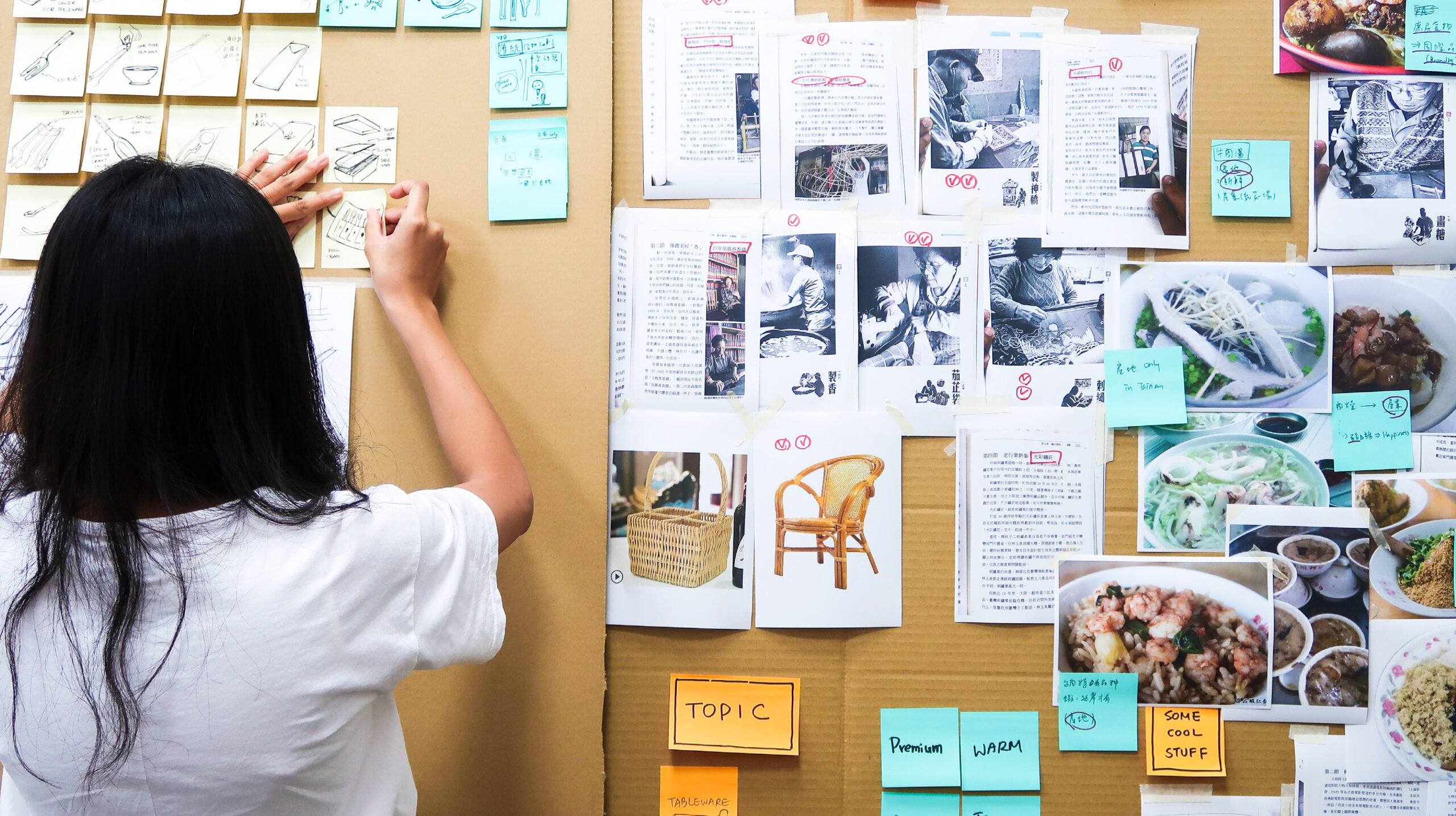
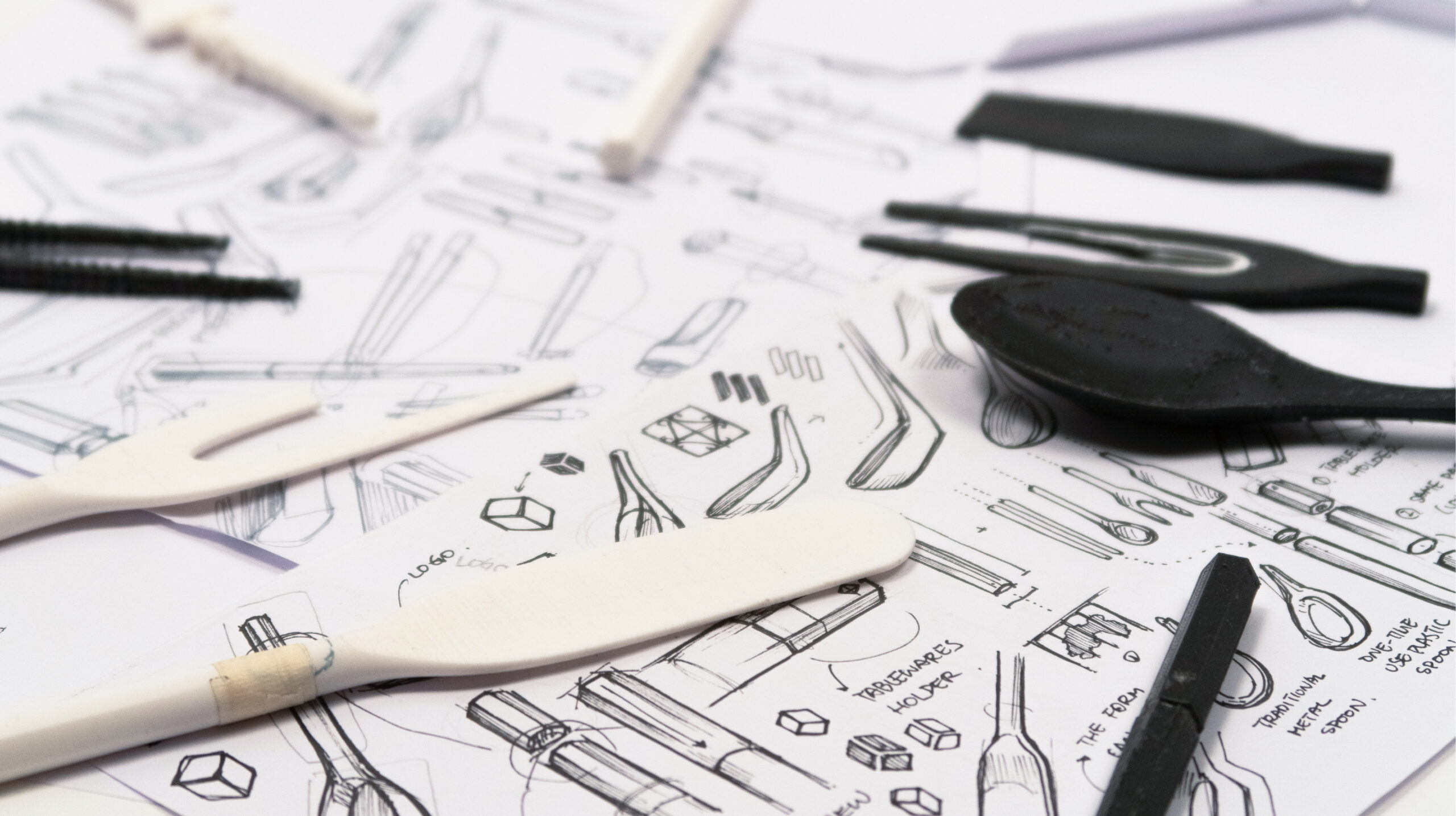
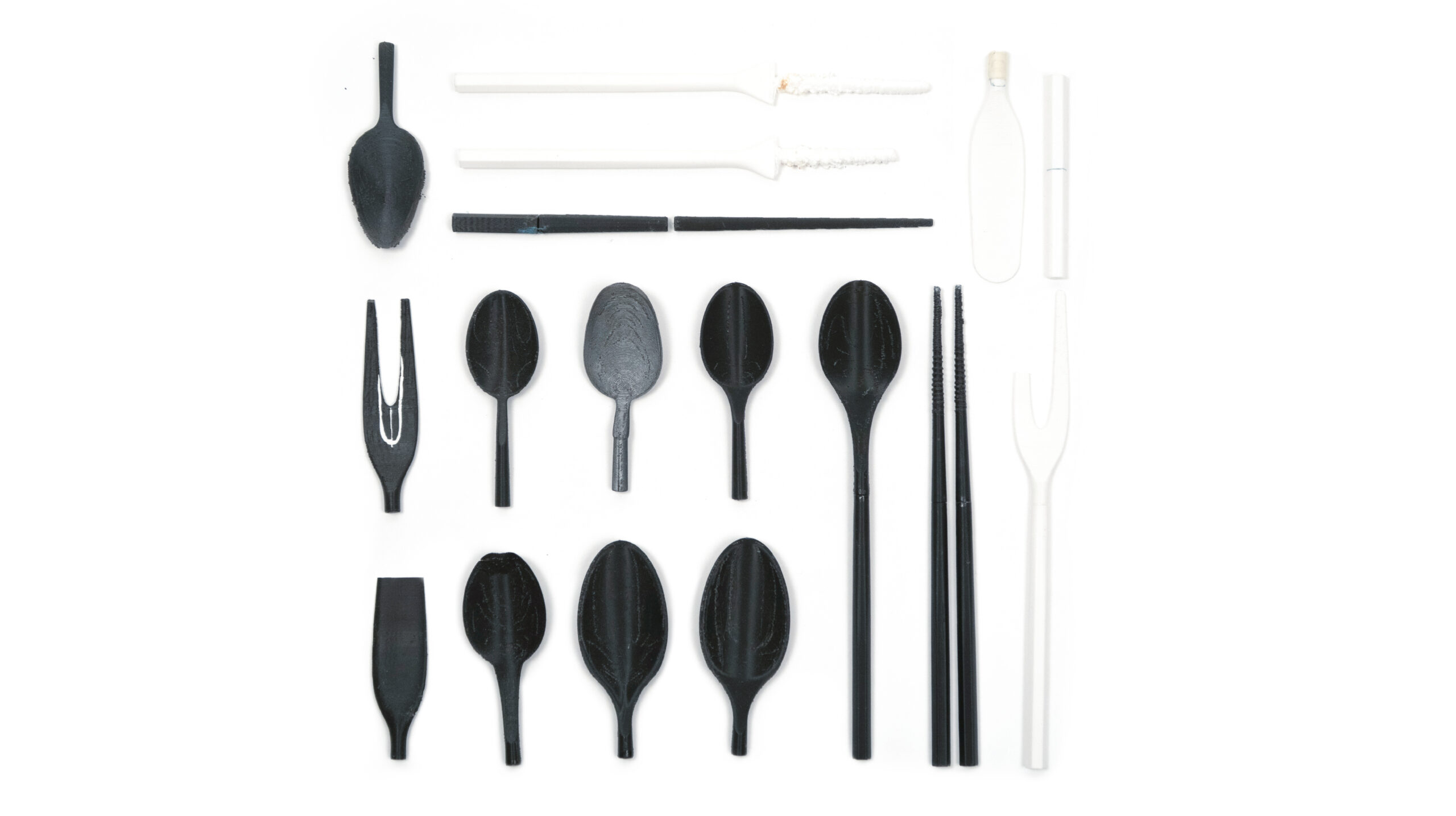
Exploring Use & Form
Design inspiration came from Tainan’s architecture, streets, food culture, and traditional utensils. Observations of everyday dining habits also revealed that many people place tissues under their utensils for hygiene. This led to detachable utensil ends that can also serve as a small utensil stand.
Initial Design
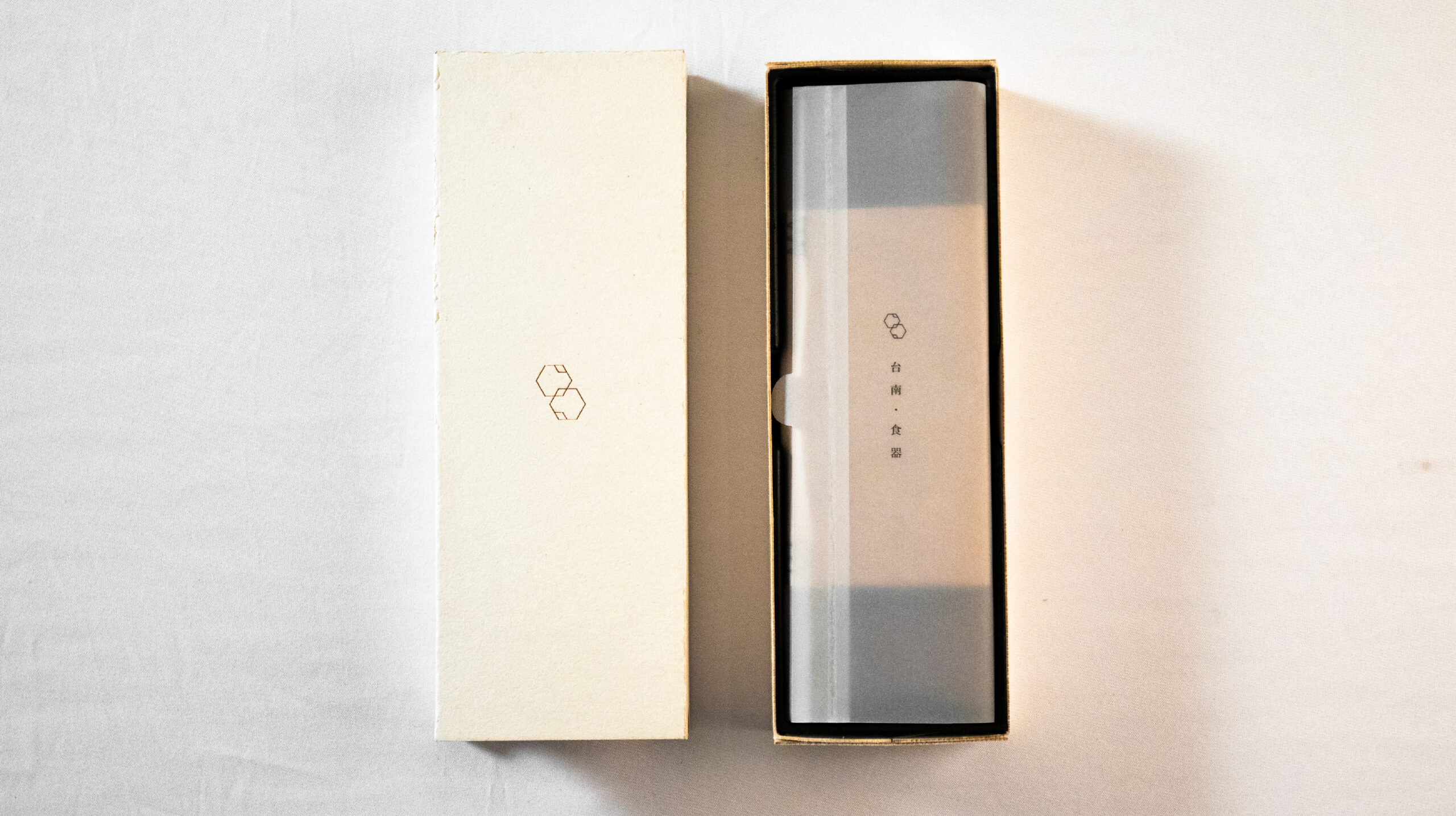
The first version included four brass utensils, a hexagonal utensil pouch, a booklet about Tainan food culture, and a drawer-style box. The brass gave the utensils a classic feel, while the hexagonal pouch was inspired by the shape of Tainan City. The drawer-style box was designed to create a more engaging unboxing experience and make the set suitable for both everyday use and gifting.
External Support & Product Development
The project was selected for the NCKU Innovation Dream Project, providing funding and guidance from professors and industry experts. This support helped refine the prototypes, production methods, and product feasibility, moving the project from an initial concept toward a more developed product.
Refining the Form
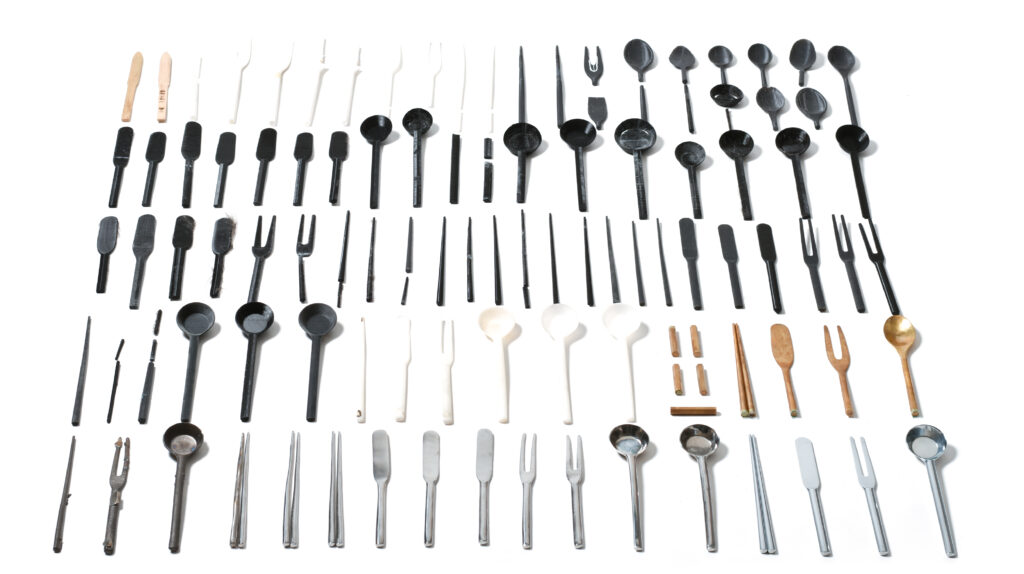
Based on feedback on usability and cleaning, the detachable utensil stand was removed and the four utensils were redesigned as a unified set. The updated design uses simple forms, soft curves, and smooth surfaces, combining the character of traditional bamboo utensils with a more modern look and feel.
Refining the Packaging
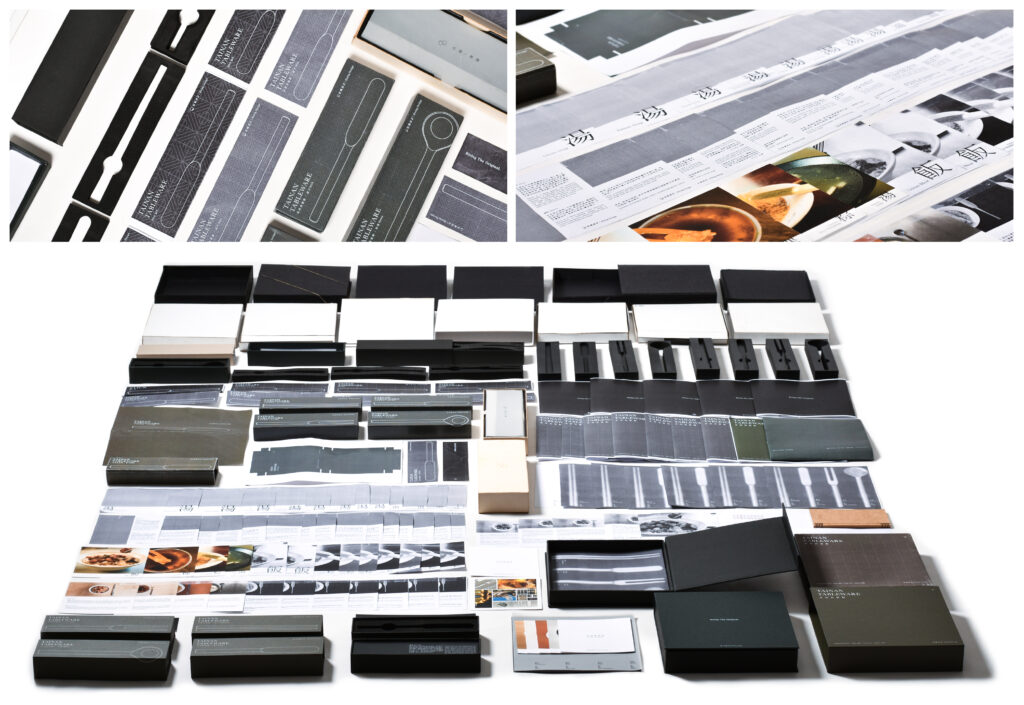
The new packaging focused on creating a cultural gift experience. Traditional Tainan window grille patterns were transformed into embossed details, while the drawer-style structure and lift-up inner box created a layered unboxing experience. The Food Culture Cards were also refined through multiple rounds of size and layout adjustments, combining food photography and stories about four traditional Tainan dishes.