
Pokémon Wooden Puzzles
Designer 方芊文 / 王詠心 / 黃宏凱
Project Highlights
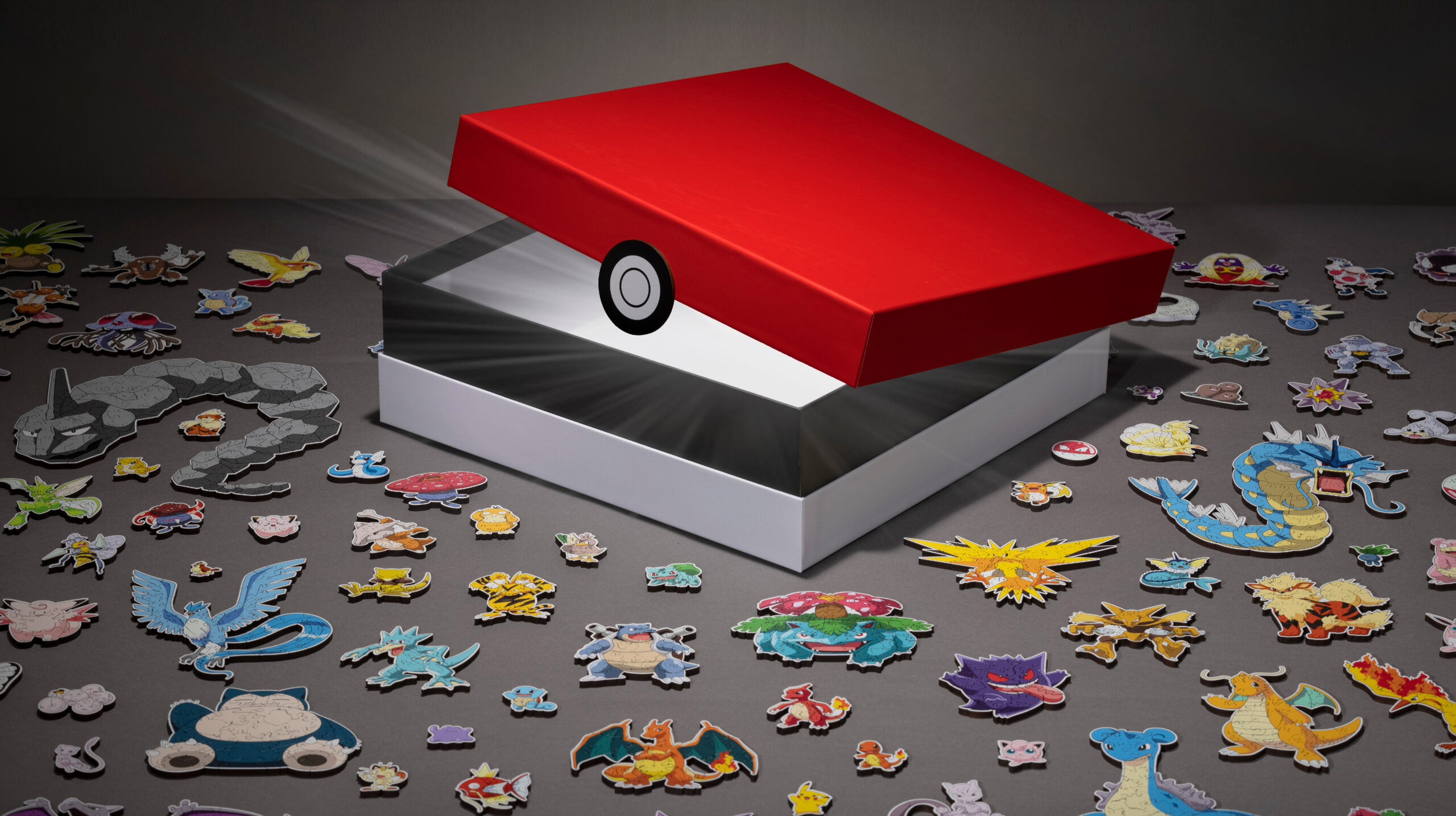
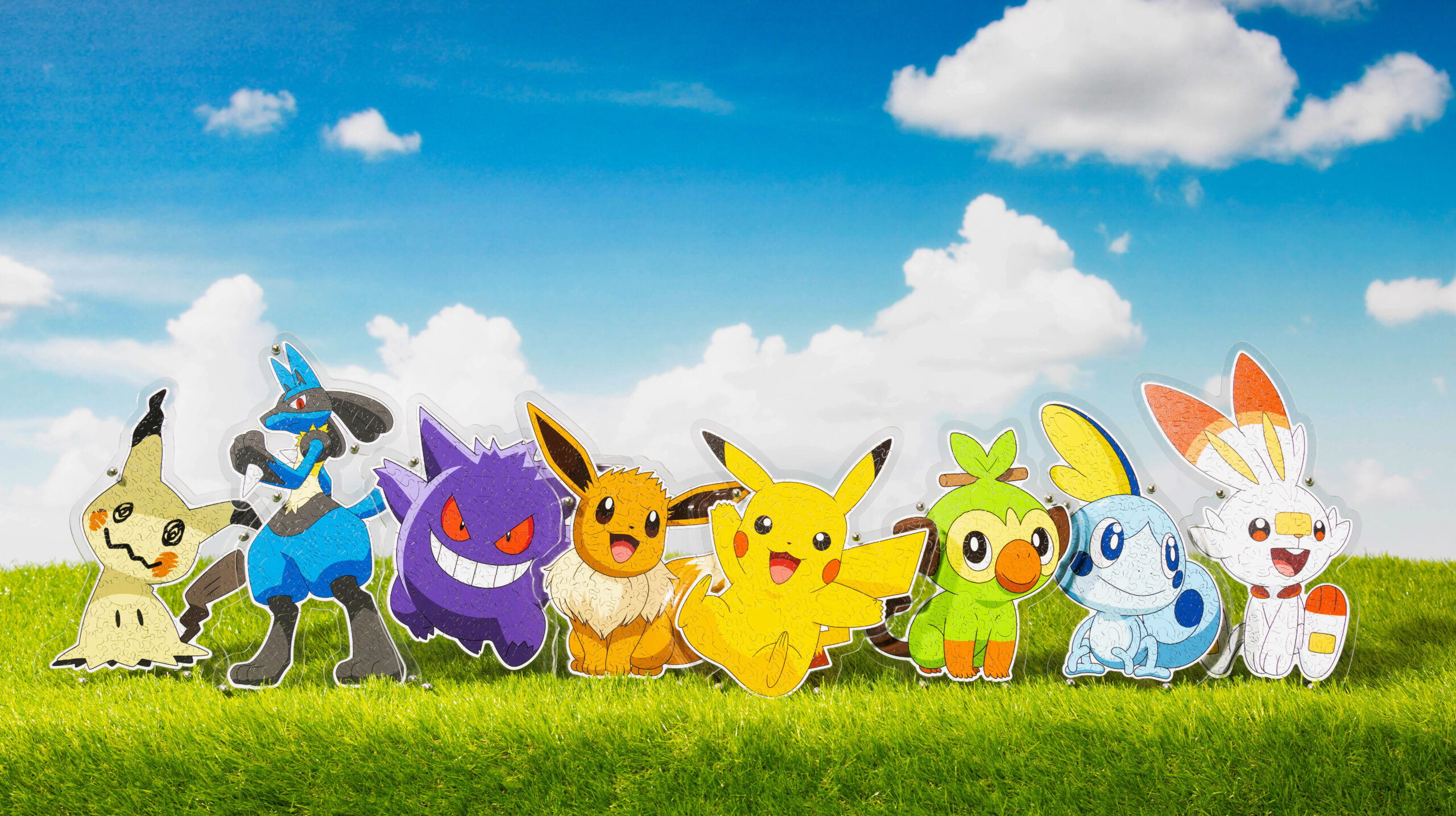
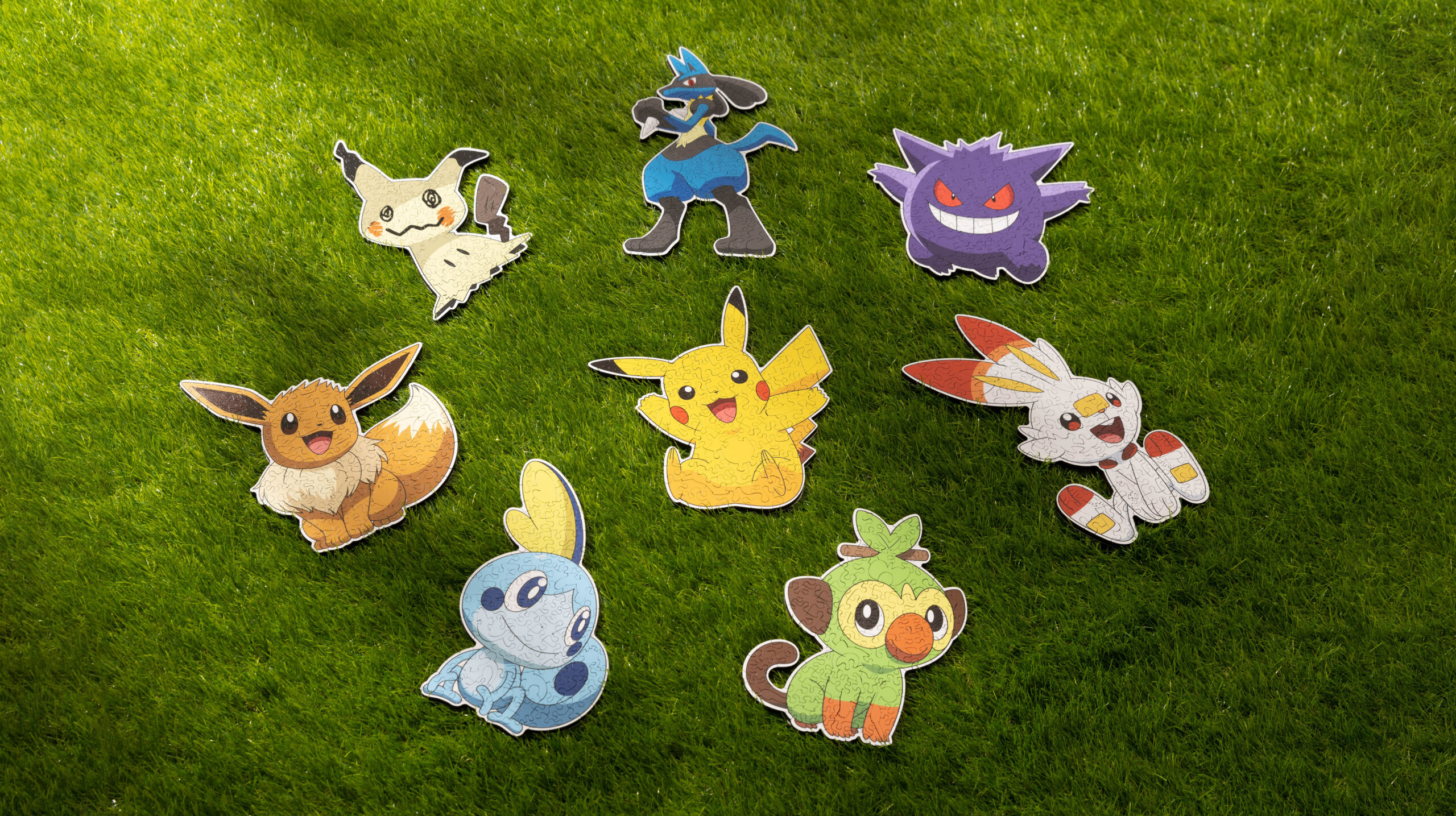
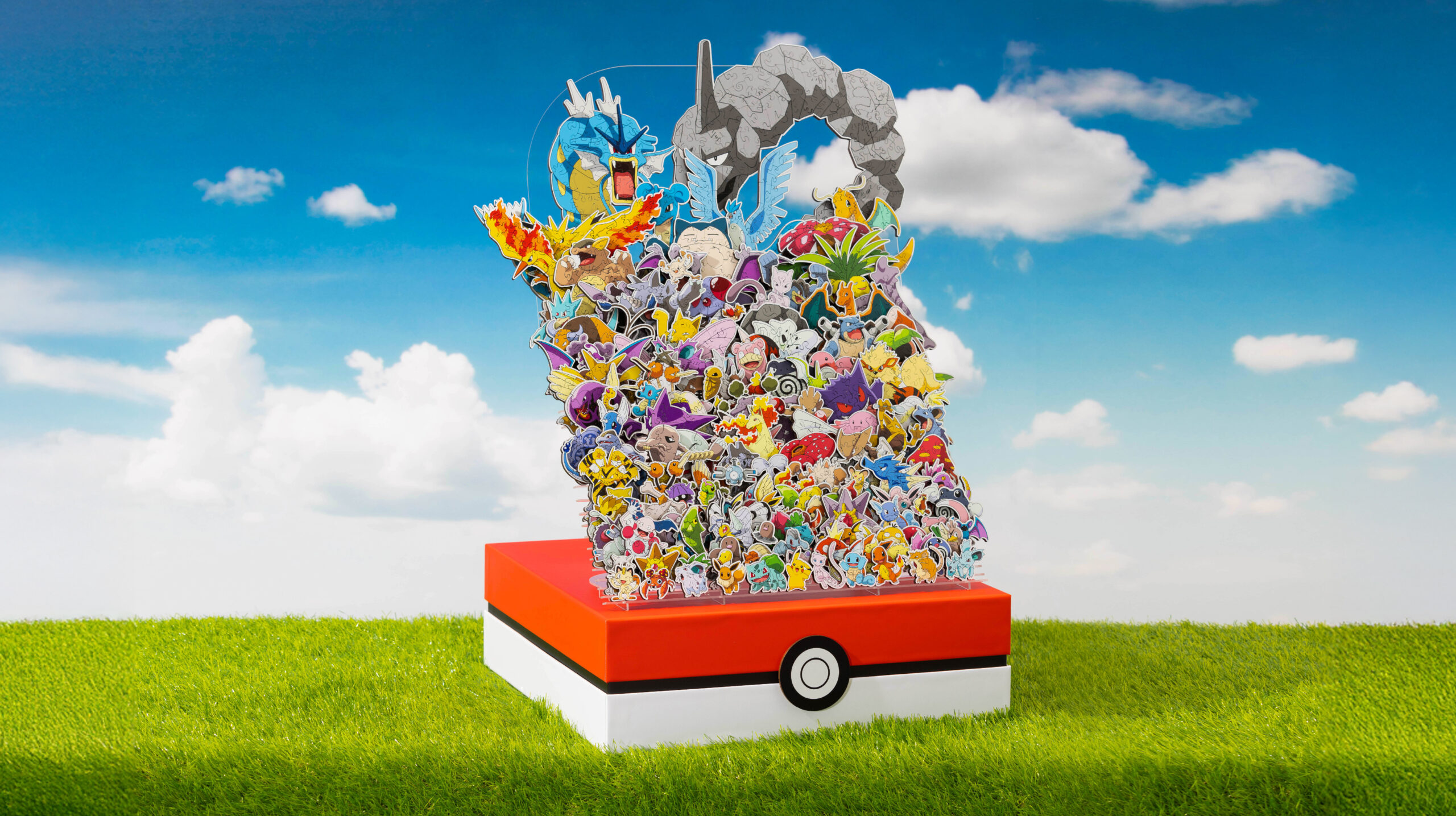
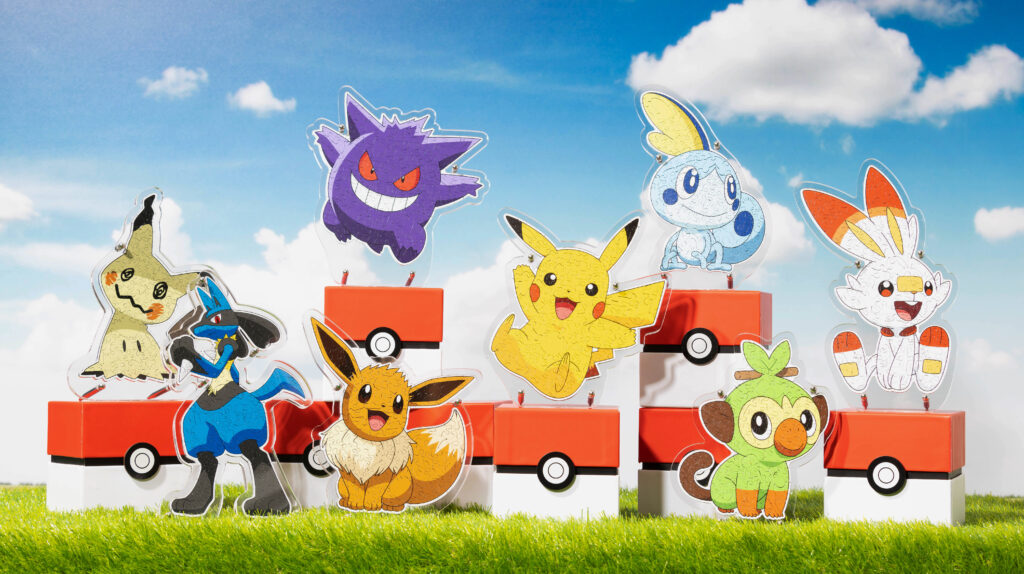
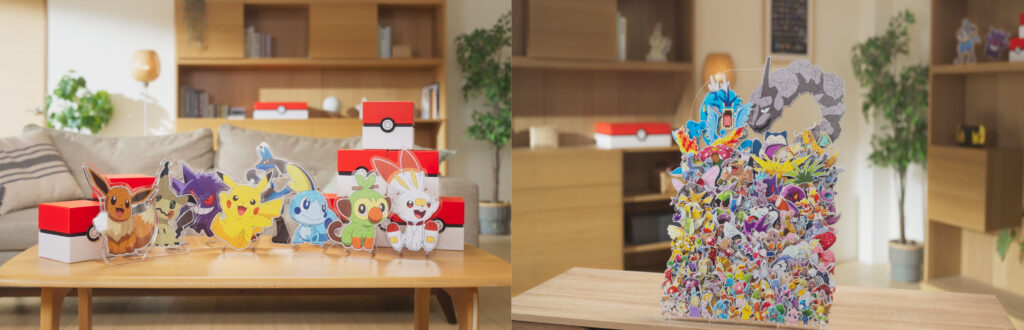
This 2024 collaboration between Hellofish and Pokémon includes two puzzle series: 151 Original Pokémon Puzzles, a large collector’s box featuring all 151 original Pokémon characters, and Pokémon Classic Wooden Puzzles, a series of eight 100-piece shaped puzzles featuring popular Pokémon characters and starter Pokémon.
This was my first large-scale Japanese IP project. I was mainly responsible for the Pokémon Classic Wooden Puzzles, including character composition, puzzle shapes, colors, packaging, and promotional gifts. I also joined product planning and project discussions, learning how to balance creative ideas with strict brand guidelines.
Design Feature
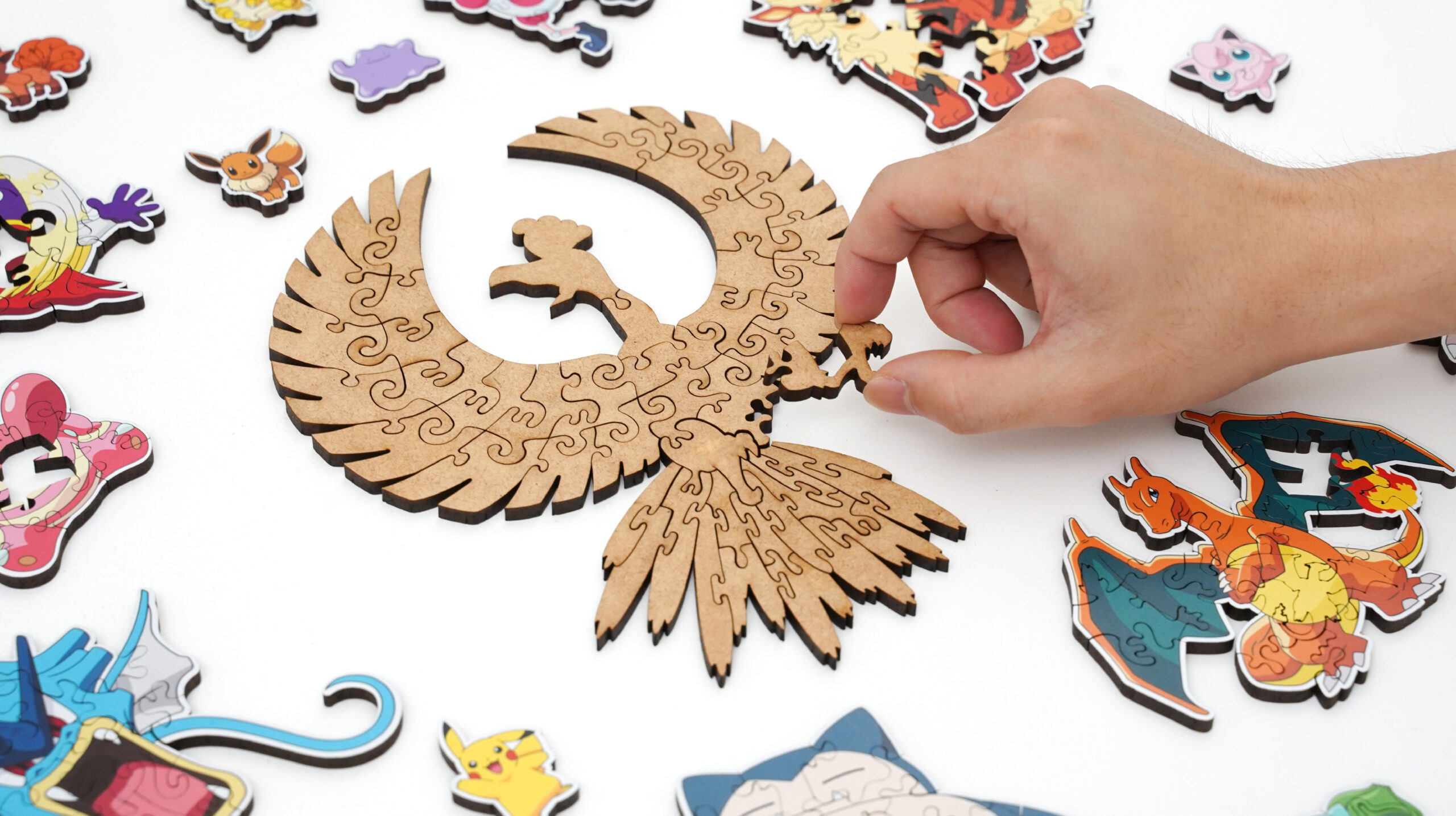
Due to strict Pokémon licensing guidelines, our original ideas for special pieces could not be approved. We kept the approved puzzle-in-puzzle design as the core feature. Selected pieces are laser-engraved on the back and can be taken out and reassembled into a smaller puzzle with a different pose. For example, the Pikachu puzzle can be reassembled into a jumping Pikachu, adding more play and surprise to the experience.
Design Process
Product Direction & Goals
The original 151 Pokémon are a childhood memory for many longtime fans, but there were fewer products focused on these classic characters. We aimed to create a wooden puzzle with both collectible and emotional value, using unique shapes and interactive elements to stand out from existing products.
Early Concepts
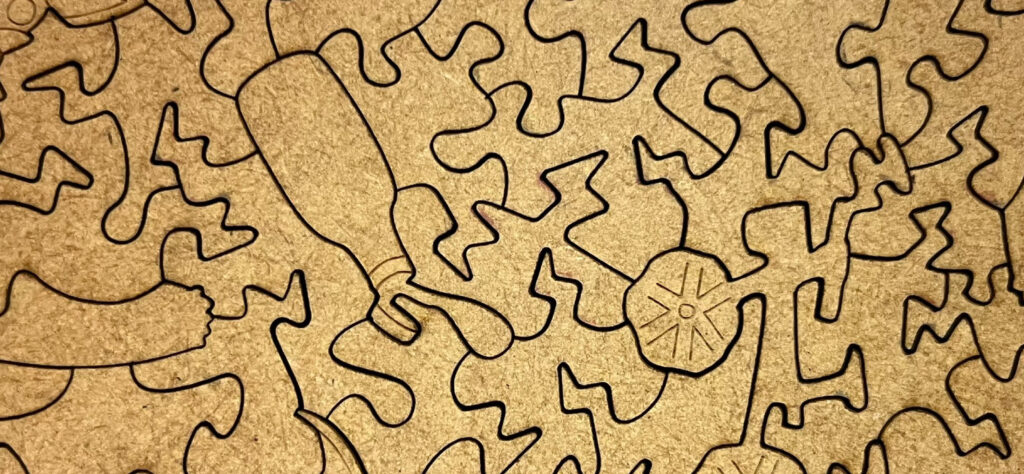
I explored ways to bring character stories into the puzzle pieces, such as ketchup for Pikachu and a Poké Ball for Mimikyu. I also experimented with evolution forms as special pieces and developed the puzzle-in-puzzle design to create an extra character pose after completing the main puzzle.
Design Challenges
Strict Pokémon licensing guidelines led to most early concepts being rejected, including objects, evolution forms, and logos. After several discussions, the puzzle-in-puzzle design was approved with restrictions: it could not appear on packaging or instructions, and cutting lines could not cross the characters’ eyes.

Final Design
The final design focused on the characters themselves, removing extra objects and story elements. The puzzle layout and cutting lines were refined to make the puzzle-in-puzzle design feel more natural while keeping each character easy to recognize.
Prototyping & Production
Multiple laser-cut prototypes were created to test piece layout, fit, and visual clarity. Cutting and engraving settings were refined with the engineering team to allow enough production tolerance while maintaining the final design.